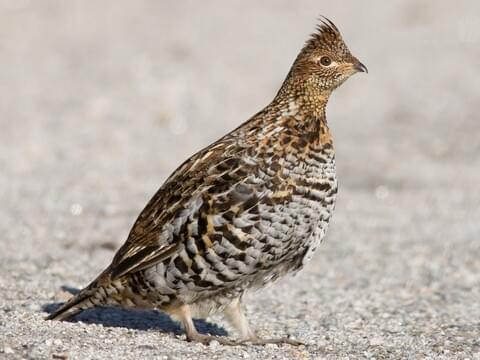
The Ruffed Grouse (Bonasa umbellus) is a striking and adaptable bird native to the forests of North America, including the state of Pennsylvania. Renowned for its distinctive courtship display, male Ruffed Grouse create a drumming sound by beating their wings rapidly against the air, creating a reverberating thump. This ritual is not only a mesmerizing natural spectacle but also serves as a means of communication during the breeding season. These birds are well-camouflaged, featuring mottled brown plumage that helps them blend seamlessly with the woodland environment, providing effective protection from predators.
Another fascinating aspect of the Ruffed Grouse is its ability to thrive in a variety of habitats, ranging from dense forests to young regenerating woodlands. They are particularly fond of areas with a mix of deciduous and coniferous trees, where they find both suitable food sources and secure roosting sites. Furthermore, Ruffed Grouse are known for their consummate foraging skills, relying on a diverse diet that includes buds, fruits, seeds, and insects. Their specialized digestive system allows them to extract maximum nutrition from the buds of trees like aspen and birch, showcasing their ecological importance in shaping forest ecosystems. Overall, the Ruffed Grouse's unique behaviors, impressive adaptability, and vital ecological role make it a captivating and significant species within the natural landscapes of Pennsylvania.
Physical Characteristics
- Size: 17-20 inches in length (approximately the size of a small chicken)
- Weight: 1-1.5 pounds (450-680 grams)
- Wingspan: 22-25 inches
- Plumage: Complex pattern of brown, gray, black, and white providing excellent camouflage. Two color phases exist: gray-phase (more common in north) and red-phase (more common in south)
- Distinctive Features:
- Black neck ruff that can be expanded during displays
- Small head crest that raises when alarmed
- Broad, fan-shaped tail with dark band near tip
- Feathered legs down to the toes for winter insulation
- Lifespan: Average 1-3 years in wild, though some may live up to 8 years.
The Drumming Sound & Behavior
The male's famous drumming display begins with slow, tentative wing beats that accelerate into a rapid blur lasting 8-11 seconds. This sound isn't created by hitting a log (a common misconception) but by compressing air with rapid wing movements while standing on an elevated platform. The drumming serves multiple purposes:
- Attracts females within hearing distance
- Establishes territory against competing males
- Signals dominance and fitness
Drumming typically occurs at dawn and dusk during spring breeding season, with peak activity in April and May. The sound can carry up to a quarter mile through dense forest.
Scientific Classification
- Kingdom: Animalia
- Phylum: Chordata
- Class: Aves
- Order: Galliformes
- Family: Phasianidae
- Genus: Bonasa
- Species: B. umbellus
Historical & Cultural Significance
The Ruffed Grouse was designated as Pennsylvania's state bird in 1931. It holds cultural importance for:
- Native American tribes who considered it a symbol of forest health
- Early settlers who relied on it as a food source
- Modern hunters who value it as a challenging game bird
- Birdwatchers who seek its elusive presence