The Ruffed Grouse is well-suited to a diverse range of habitats, predominantly inhabiting deciduous and mixed forests throughout its native range, including Pennsylvania. These birds thrive in environments characterized by a combination of mature trees and regenerating woodlands, providing an ideal setting for their unique behaviors. The presence of aspen, birch, and other deciduous trees is particularly attractive to Ruffed Grouse, as they heavily rely on the buds of these trees for sustenance. The understory of such forests, with its dense vegetation and ample cover, offers protection from predators and serves as prime nesting grounds during the breeding season.
The behaviors and habits of the Ruffed Grouse are captivating and essential to their survival in the wild. During the breeding season, males engage in elaborate courtship displays, notably the drumming ritual. This involves the rapid beating of their wings, creating a distinct thumping sound that resonates through the forest and serves to attract potential mates while establishing territory. Beyond their courtship displays, Ruffed Grouse are known for their ground-nesting habits, choosing concealed locations amidst thick vegetation to safeguard their nests and vulnerable chicks. Their cryptic plumage and ability to freeze in place further contribute to their defense mechanisms against predators, allowing them to blend seamlessly into their woodland surroundings.
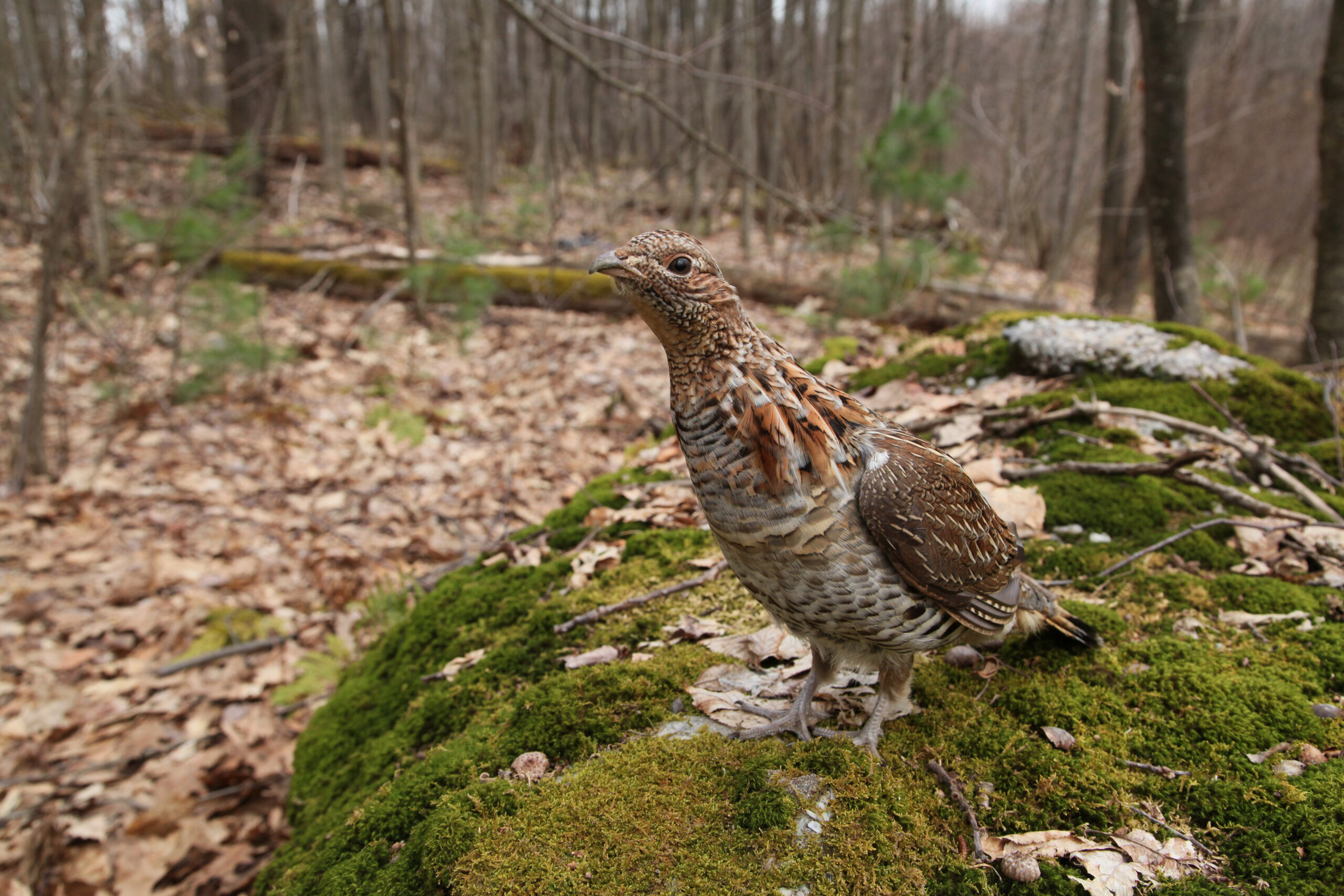
Images capturing the habitat of the Ruffed Grouse showcase the bird's affinity for lush and varied landscapes. Photographs could feature these birds in the midst of deciduous forests, perched on tree branches, or foraging amidst fallen leaves. The dynamic interplay of light and shadow in such habitats underscores the bird's adaptability to different light conditions. Additionally, images of Ruffed Grouse engaged in drumming displays or tending to their chicks offer a visual narrative of their complex behaviors within their natural environment, providing observers with a deeper appreciation for the intricacies of their lives in the wild.